Travelling With Your Dog: What Do You Really Need?
Whether you're heading off on a weekend adventure, visiting family or simply taking your dog for a day out, travelling with your dog can be great fun.
But a little preparation before you set off can make the journey much easier — and safer — for everyone.
So, what do you really need when travelling with your dog?
Keeping Your Dog Safe in the Car
One of the most important things to think about before setting off is how your dog will travel in the car.
The Highway Code, Rule 57, says:
“When in a vehicle make sure dogs or other animals are suitably restrained so they cannot distract you while you are driving or injure you, or themselves, if you stop quickly.”
It also gives examples of suitable ways to restrain animals in cars, including a seat belt harness, pet carrier, dog cage or dog guard.
There isn't necessarily one solution that works for every dog or every vehicle. The important thing is choosing a suitable method that keeps your dog secure and comfortable while allowing you to concentrate on driving.
Dog Harness and Seat Belt Clip
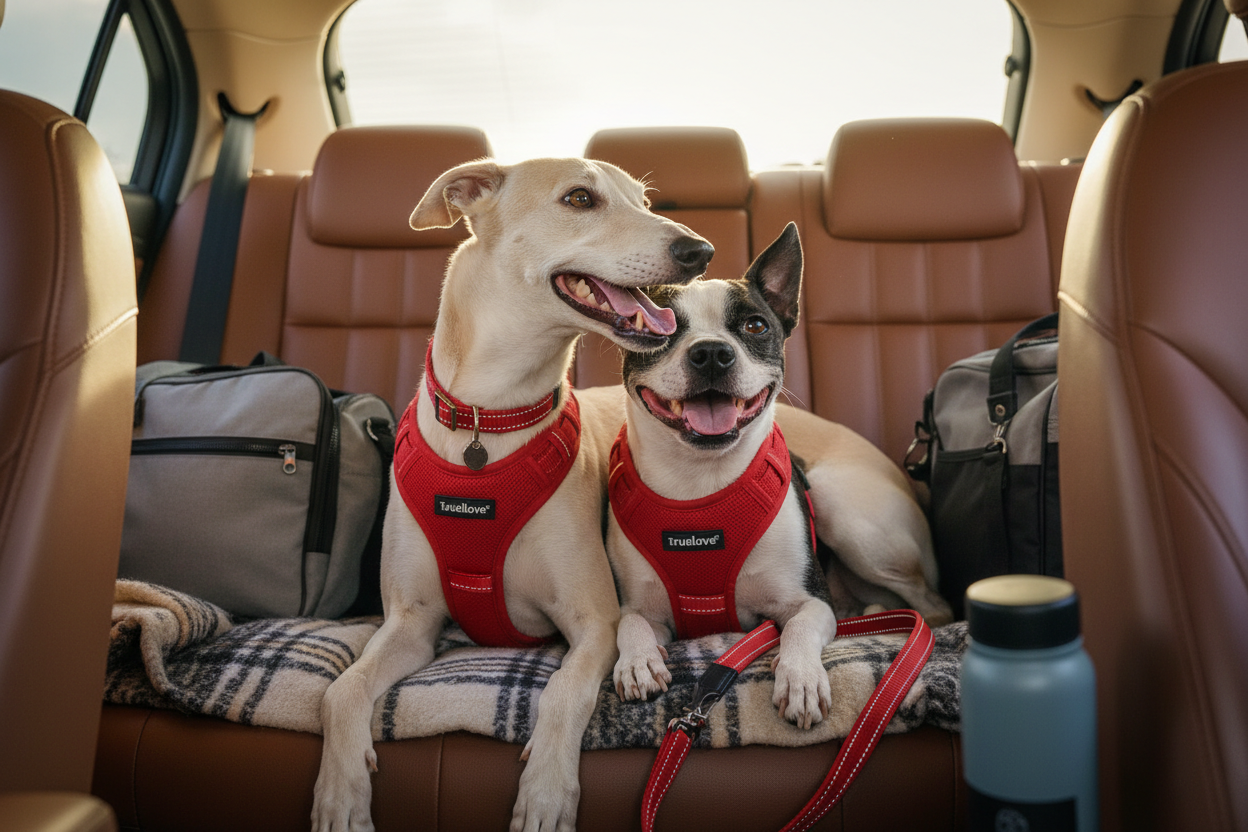
For dogs who are comfortable travelling in a harness, a dog seat belt clip can be a simple option.
Our Truelove dog seat belt clip attaches to a suitable dog harness and connects to the vehicle's existing seat belt. The car's seat belt system allows some movement during normal travel, while the belt can lock if you brake suddenly.
We particularly like this option because it's quick to put on and take off and doesn't require a complicated setup.
Remember: always make sure the harness and restraint are suitable for your dog and are fitted and used correctly.
Travelling in a Crate
For some dogs, a suitable travel crate may be the better option.
A crate can provide your dog with a familiar, enclosed space and can be particularly useful for dogs who are already comfortable and relaxed travelling in one.
The crate should be appropriate for your dog's size and positioned securely so that it cannot move around during the journey.
Dog Guards
A dog guard can be another option, particularly for larger vehicles where your dog travels in the boot area.
As with any form of restraint, it's important that the setup is appropriate for your dog and your vehicle.
The Highway Code recognises dog guards as one of the ways animals can be suitably restrained in a car.
What Should You Pack for Your Dog?
Once you've sorted out how your dog is travelling, it's time to think about what they'll need when you arrive.
Here's our handy packing list:
-
Food – ideally take their usual food rather than changing their diet while you're away.
-
Water and a travel bowl – especially important on longer journeys.
-
Lead and harness – and it's always worth having a spare lead.
-
Poo bags – because nobody wants to be caught without them!
-
Towels – particularly if you're heading somewhere muddy or near the water.
-
A familiar blanket or bed – something that smells like home can help your dog settle somewhere new.
-
Their favourite toy – a little bit of home comforts can go a long way.
-
Any medication they need – make sure you have enough for the whole trip.
-
Dog first-aid supplies – a small kit can be useful for those unexpected scrapes.
-
Food storage – particularly useful for longer trips or holidays.
-
A spare towel or blanket for the car – because muddy paws happen!
Keeping your dog's normal routine as much as possible can also help them feel more settled when you're away from home. The RSPCA recommends maintaining familiar routines around food, exercise, sleep and toilet breaks where possible.
Take Regular Breaks
If you're going on a longer journey, remember that your dog needs breaks too.
Stopping regularly gives them the opportunity to stretch their legs, have some water and go to the toilet.
It's also a good chance for you to have a quick break from driving.
Always make sure your dog is safely secured before opening the car door. A dog who is excited about being somewhere new can easily make a dash for freedom!
The RSPCA recommends taking regular breaks on long journeys and making sure dogs are exercised on a lead so they cannot escape from the vehicle.
Help Your Dog Get Used to Car Journeys
If your dog isn't used to travelling, don't make their first experience a three-hour road trip!
Start with short journeys and gradually increase the length as they become more comfortable.
Some dogs love the car from day one. Others need a little more time.
If your dog suffers from travel sickness or becomes particularly anxious in the car, speak to your vet for advice.
Don't Forget About Temperature
It's really important to think about the temperature inside the car.
Never leave your dog alone in a warm or hot car. Cars can become dangerously hot very quickly, even when the weather outside doesn't initially feel particularly warm.
Good ventilation, shade and planning your journey for cooler parts of the day can all help, but the safest option is not to leave your dog unattended in the car.
When You Arrive
A new place can be exciting for your dog, but it can also be a little overwhelming.
Give them time to settle in and explore at their own pace. Keep them on their lead until you're confident that the area is safe and you know where the roads and other hazards are.
Taking something familiar from home, such as their bed or blanket, can also help them feel more comfortable.
And, of course, don't forget to check whether your destination is dog-friendly before you leave. It's much nicer arriving somewhere knowing your four-legged family member is welcome!
Our Dog Travel Checklist
Before you set off, have a quick check:
-
☐ Suitable harness or travel restraint
-
☐ Seat belt clip, crate or dog guard
-
☐ Lead and spare lead
-
☐ Check microchip and dog tag info is correct
-
☐ Food
-
☐ Water and travel bowl
-
☐ Poo bags
-
☐ Bed or familiar blanket
-
☐ Favourite toy
-
☐ Towels
-
☐ Any medication
-
☐ First-aid supplies
-
☐ Check your route and plan breaks
-
☐ Check your destination is dog-friendly
A Little Preparation Goes a Long Way
Travelling with your dog doesn't need to be complicated.
Whether your dog travels in a crate, behind a dog guard or secured with a suitable harness and seat belt, the important thing is that they are comfortable, appropriately restrained and unable to distract the driver.
A little preparation before you leave means you can concentrate on the road while your dog can relax and enjoy the journey too.
Because after all, the best adventures are the ones we can enjoy together. 🐶❤️🚗
Want to keep your dog safely restrained?
Take a look at our Truelove Dog Seat Belt Clip or our Harnesses.
Happy travels from all of us at Wiggles & Wags! 🐾
Useful Information
If you're planning to travel with your dog, these websites contain useful information and guidance:
-
The Highway Code – Rules about animals: Rule 57 explains the importance of suitably restraining dogs and other animals when travelling in a vehicle. Read Rule 57 on GOV.UK
-
RSPCA – Taking your pet on holiday: Helpful advice about travelling with dogs, including car journeys, taking breaks and helping your dog feel comfortable while travelling. RSPCA pet travel advice
-
RSPCA – Dogs in hot cars: Important information about keeping dogs safe in warm weather and why dogs should never be left unattended in a hot car. RSPCA advice about dogs in hot cars
Please remember: every dog is different, and the most appropriate method of restraint will depend on your dog, your vehicle and the journey you're taking. Always make sure any harness, crate, seat-belt attachment or other restraint is suitable for your dog and used correctly.